Ice Dams and Winter Leaks
Heat escaping from the attic melts snow on the upper roof. That water runs down and refreezes at the cold eave, building a ridge of ice. Meltwater then backs up behind the ice, works under the shingles and leaks into soffits, walls and ceilings.
Why it happens here: Racine sees freeze-thaw swings all winter, and lake-enhanced storms leave heavy snow loads on roofs. The bigger issue is the attics. Pre-1940 homes and 1950s Cape Cods often have little insulation, blocked soffit vents and knee-wall spaces that leak warm air right at the roofline. Many older roofs also went on before ice barrier underlayment was required, so there's nothing at the eaves to stop water once it backs up. A week of single-digit nights followed by a 38°F afternoon is all it takes.
Signs to look for
- Thick ice ridges along gutters and eaves
- Icicles hanging from soffits rather than just gutter edges
- Water stains on ceilings near exterior walls
- Damp or peeling paint below windows
- Frost or wet insulation in the attic
- Sagging or ice-packed gutters
Local patterns: Ice dams are especially common on Cape Cods in Elmwood Park and Mount Pleasant, on balloon-framed two-stories in Uptown and West Racine, and on north-facing eaves along North Beach. January and February bring the most calls, usually after a thaw follows a heavy snow.
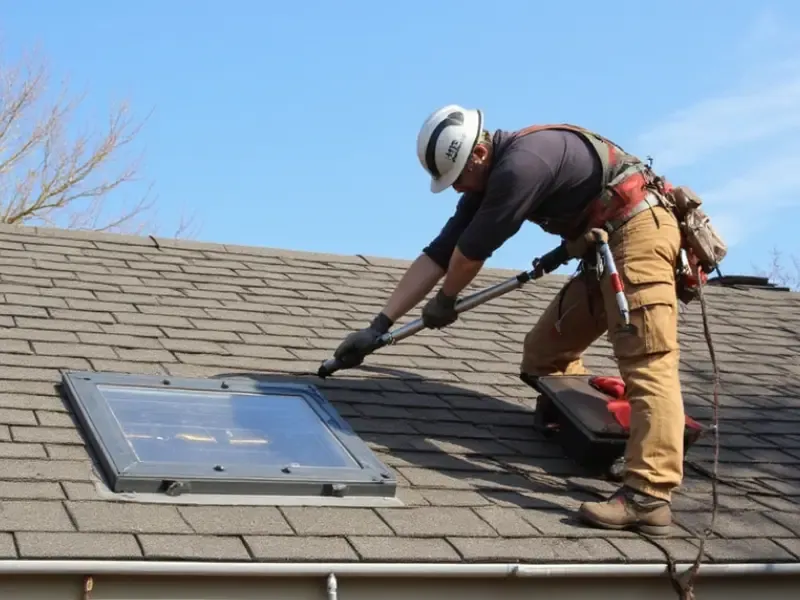
How we fix itWe remove the ice safely with steam, without chipping into shingles. Then we stop the active leak, document the interior damage, and fix the cause with better ventilation, air sealing and ice barrier underlayment.
Hail and Wind Storm Damage
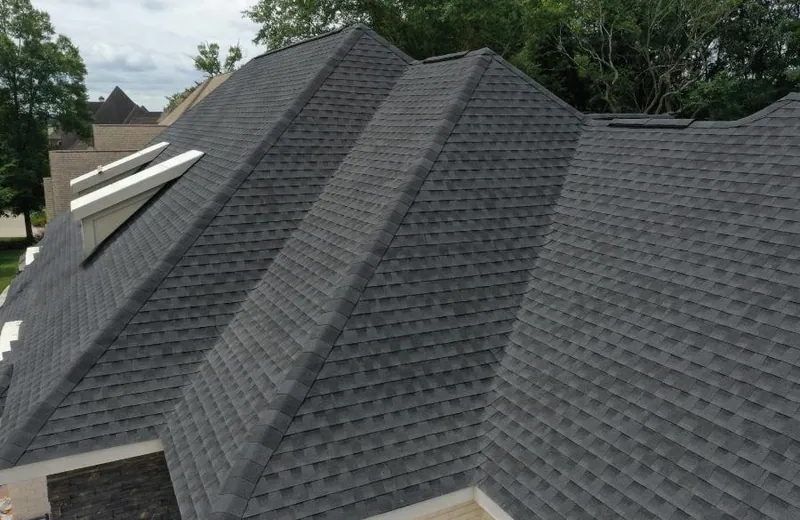
Hail bruises asphalt shingles and knocks off the protective granules. Strong straight-line winds break the seal strips, lift or crease tabs, and tear off ridge caps and drip edge. That leaves the roof open to the next rain.
Why it happens here: Southeast Wisconsin's severe-weather season runs from about April through August, with thunderstorm lines, hail and the occasional derecho crossing Racine and Kenosha counties. Homes near the lake catch stronger, steadier onshore gusts. Shingles that went on with the minimum four nails, or with nails driven high, are the first to let go. Hail damage often can't be seen from the ground, so many homeowners don't know there's a problem until a leak shows up months later.
Signs to look for
- Shingles or ridge caps in the yard
- Granules piling up in gutters and downspouts
- Dark, soft dents on shingles
- Creased or lifted shingle tabs
- Dented gutters, vents or metal flashing
- New leaks after a storm
Local patterns: Wind damage is most common on exposed lakefront homes in Wind Point and Elmwood Park. Hail tends to hit open suburban subdivisions in Mount Pleasant, Caledonia, Somers and Pleasant Prairie, and door-knockers flood those neighborhoods within days of a storm.
How we fix itWe photograph and document the damage for your insurance claim, tarp or patch right away if needed, and then repair or replace using high-wind nailing patterns.
Failing Chimney Flashing
Flashing is the metal that seals the joint where a brick chimney meets the roof. Once it pulls away, corrodes, or was just smeared with tar, water runs down the brick and into the attic, framing and walls.
Why it happens here: Lots of older Racine homes still have their original brick chimneys, and the mortar joints have been through decades of freeze-thaw. Flashing expands in the summer and shrinks in the cold, which loosens counterflashing and cracks caulk. Earlier roofers often covered the problem with roofing cement instead of cutting proper counterflashing into the mortar. Lake humidity speeds up corrosion on galvanized steel. The result is a slow leak that can rot the framing for years before a stain ever shows up indoors.
Signs to look for
- Water stains on the ceiling or wall beside the chimney
- Thick tar or caulk around the chimney base
- Loose or rusted metal at the chimney
- Crumbling mortar joints or spalled brick
- Damp framing around the chimney in the attic
- Musty smell in upstairs rooms
Local patterns: We see this all the time on Foursquares and Victorians in the Southside Historic District, Lincoln-King and Uptown, and on older homes in Kenosha's Lakeshore area and Cudahy. Problems usually show up in spring after the snow melts.
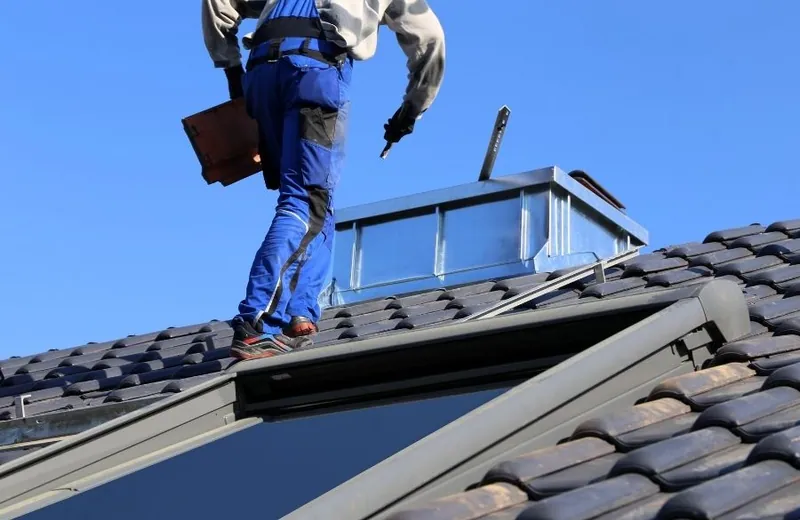
How we fix itWe remove the old patches, install step flashing with counterflashing reglet-cut into the mortar, add a cricket on wide chimneys, and seal everything with corrosion-resistant metal.
Rotted Plank Sheathing and Multiple Shingle Layers
Many older roofs have two or more shingle layers sitting on original board sheathing or spaced skip boards. Over time those boards rot, split or sag, and they no longer hold modern roofing nails securely.
Why it happens here: Racine's pre-1940 housing was built with plank or skip sheathing that was meant for wood shakes. Decades of re-roofing over the top trapped moisture, especially in attics with poor ventilation where condensation forms all winter. Wisconsin code allows only two shingle layers, and today's ice barrier requirements mean the roof has to come down to the deck anyway. This hidden condition is the biggest reason roof replacement bids on older Racine homes go up after work starts, unless the contractor plans for it up front.
Signs to look for
- Wavy or sagging rooflines
- Spongy spots when walking the roof
- Daylight visible between boards in the attic
- Shingles that won't lie flat
- Two or more layers visible at the eave edge
- Nails backing out or popping up
Local patterns: This is typical of worker cottages, bungalows and duplexes in Downtown, West Racine and Lincoln-King. We see the same thing in older parts of South Milwaukee, St. Francis and Kenosha.
How we fix itWe do a full tear-off and re-deck with plywood or OSB. Re-decking gets a line-item price in your written estimate so there are no surprises mid-job.
Ponding and Seam Failure on Flat Roofs
Flat and low-slope roofs don't shed water quickly. When water sits in low spots, freezes and thaws, it pulls apart seams, splits membranes and gets into the insulation and deck below.
Why it happens here: Downtown Racine's brick commercial blocks, flats with rear porches, and detached garages often have built-up, modified bitumen, EPDM or older TPO roofs. Racine's heavy snow loads and repeated freezing put strain on every seam. Clogged scuppers and sagging decks hold water for days at a time. Many of these roofs have been patched over and over instead of being properly restored.
Signs to look for
- Standing water 48 hours after rain
- Cracked, blistered or alligatored surface
- Seams pulling apart at edges
- Ceiling stains in top-floor units
- Wet or crushed insulation
- Debris or ice at drains and scuppers
Local patterns: We see this mostly on Downtown and Old Main Street commercial buildings, upper/lower flats in Uptown, and garages and porches all over Racine and Kenosha. It gets worse after late-winter thaws.
How we fix itWe repair seams, fix drainage, apply a coating or reinforced patches, or replace the roof with TPO or EPDM tapered for positive drainage.
Poor Attic Ventilation
An attic without balanced intake and exhaust traps heat in summer and moisture in winter. That cooks shingles from underneath, feeds ice dams and lets mold and frost build up on the sheathing.
Why it happens here: Most of Racine's older homes were built before anyone thought about attic ventilation, and later remodels often covered soffit vents. Humid lake summers above 80°F bake shingles from below, and cold winters condense household moisture on the underside of the roof deck. Cape Cod knee walls and finished attics are especially hard to vent. On many roofs we inspect, ventilation is the hidden reason the shingles wore out early.
Signs to look for
- Frost or dark staining on attic sheathing
- Curling or blistering shingles
- Hot upstairs rooms in summer
- Recurring ice dams
- Musty attic odor
- Painted-over or missing soffit vents
Local patterns: Ventilation problems are common in Cape Cods and split-levels in Mount Pleasant, Sturtevant and Caledonia, and in balloon-framed homes across the city. You'll see frost in the attic on cold January mornings and hear complaints about stifling bedrooms in July.
How we fix itWe calculate the needed net free area and then install continuous soffit intake, ridge vents and baffles, sealing attic bypasses where we can reach them.
Moss, Algae Streaks and Rusting Fasteners
Dark algae streaks and moss hold moisture against the shingles, lift the tabs and wear away granules. Salty, humid lake air also rusts exposed nails, vent flanges and older flashing.
Why it happens here: Fog and humidity off Lake Michigan keep shaded north slopes damp for long stretches, which is ideal for algae and moss. Mature trees in older neighborhoods add shade and leaf litter. On lakefront homes, steady onshore wind carries moisture that corrodes plain steel parts much faster than it would inland.
Signs to look for
- Black or green streaks on north-facing slopes
- Moss clumps along shingle edges
- Lifted or curled tabs
- Rust stains running from vents or flashing
- Granule loss in shaded areas
Local patterns: This is most noticeable along North Beach and the lakefront, in Wind Point, and under the tree canopy in Elmwood Park and the Southside.
How we fix itWe clean gently, never with a pressure washer. Then we replace corroded parts with stainless or coated metal and recommend algae-resistant shingles when it's time to replace.